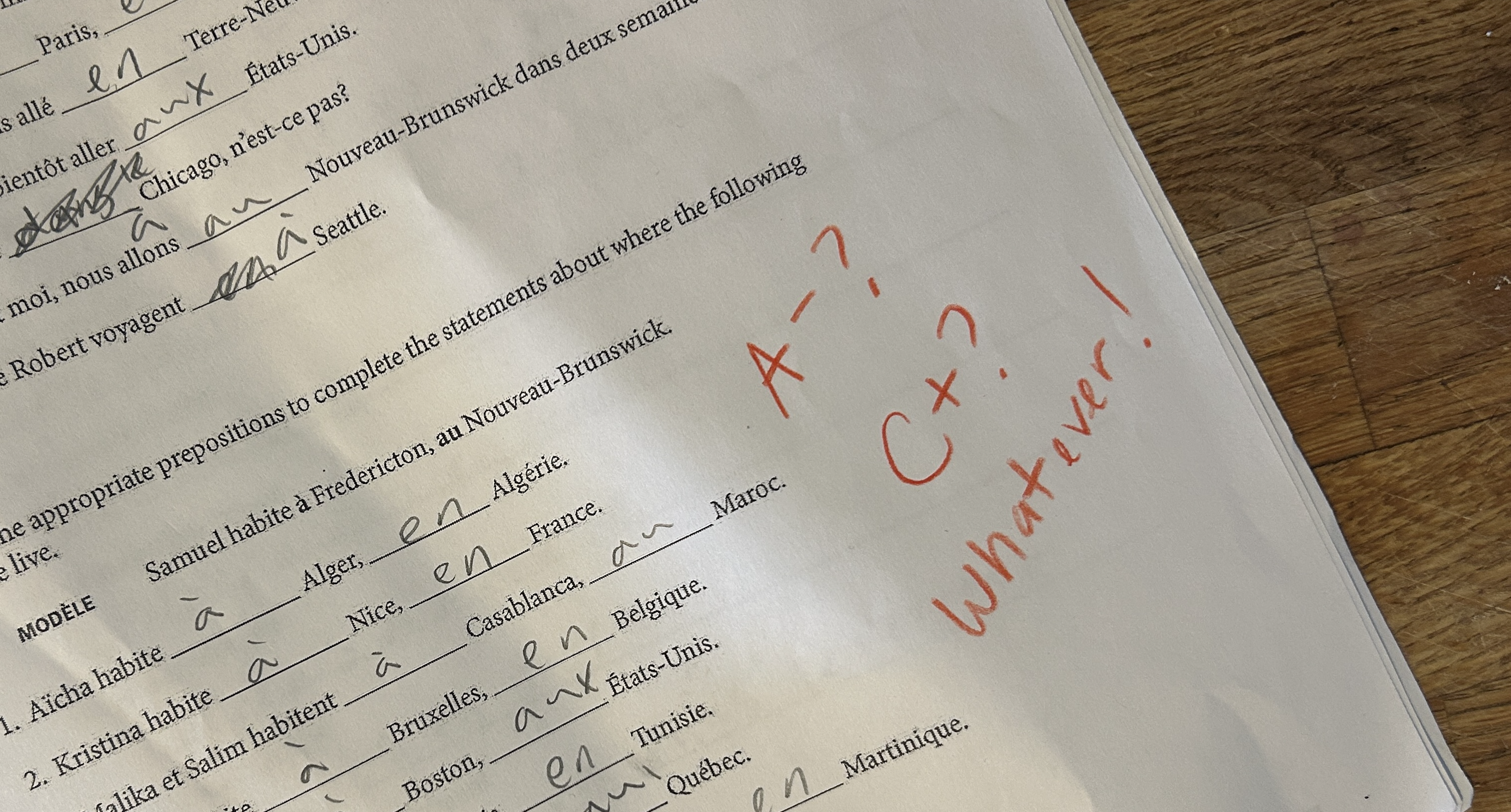
As I write this, I’ve just wrapped up a start-of-semester ritual that we don’t spend much time discussing. I’ve set up my gradebooks for the semester. I spend time thinking about how I weight my grades and what assignments belong in each category. I nitpick and debate. Should the category for essays and projects in a composition course weigh 60%? 70%? What about attendance and participation? I fiddle and tinker and finally publish my course.
In May, my attention will return once again to the all-knowing gradebook as I wrap up finals and prepare to submit letter grades for each student in SIS. The intricate recipe I set up before the semester begins is supposed to tell me each student’s mastery of the composition competencies, but sometimes, I think it might as well tell me that the answer to Life, The Universe, and Everything is 42. Is that B, or is that D, an actual representation of that student’s knowledge of composition? Or is it an indicator of that student’s executive function and ability to manage demands on her time?
I know what it means to teach. I know what it feels like when a student “gets it”, when he locks in and writes something that knocks us both off our feet, but sometimes the ritual of the gradebook doesn’t seem to align with what I know good teaching to be.
I know it’s not just me who wrestles with these sometimes-conflicting sides of the educational coin. Discussions about the inherent problems with grading and the variety of ways to do it differently are having a moment in higher education right now. Asao B. Inoue’s work on labor-based grading has impacted how instructors at Arizona State engage in the feedback loop with their students. Jesse Stommel from University of Denver coined the term “Ungrading” and has been sharing about this approach in blogs, books, on podcasts, and at conferences (such as the POD Conference I attended in San Diego in November). Under the umbrella of alternative grading also fall ideas like negotiated grading, specs grading, and a host of other strategies that seek to move instructors away from the often-punitive points-for-work method and toward… something else.
It is that “something else” that I desire to understand. Is there a method that would improve teaching and learning in my composition classroom? And should I employ one of these strategies, how do I guarantee that my students are meeting the course competencies? (Does the grading approach I use now guarantee that my students are meeting the course competencies?)
If you, too, would like to descend into the rabbit hole of alternative grading with me this semester, shoot me an email (lisa.moore@gccaz.edu) to let me know. I’d like to gather a group of curious faculty to form a professional learning community (PLC) where we can read about, discuss, and even try out some of the alternative grading strategies that abound. And, if at the end of it all, we decide that what we are doing now is the best approach, so be it. At least we will set up our gradebooks each semester with confidence.


