

Learning From Student Ambassadors
Welcome back to a new school year, colleagues! Generative AI continues to be a major conversation on campuses across the country. At the GCC Center for Teaching, Learning, and Engagement (CTLE), we are dedicated to supporting student success by helping you grow professionally and explore new teaching strategies. Lately, we have heard many questions from faculty about AI. Some faculty feel excited to use these tools, while others worry about academic honesty.
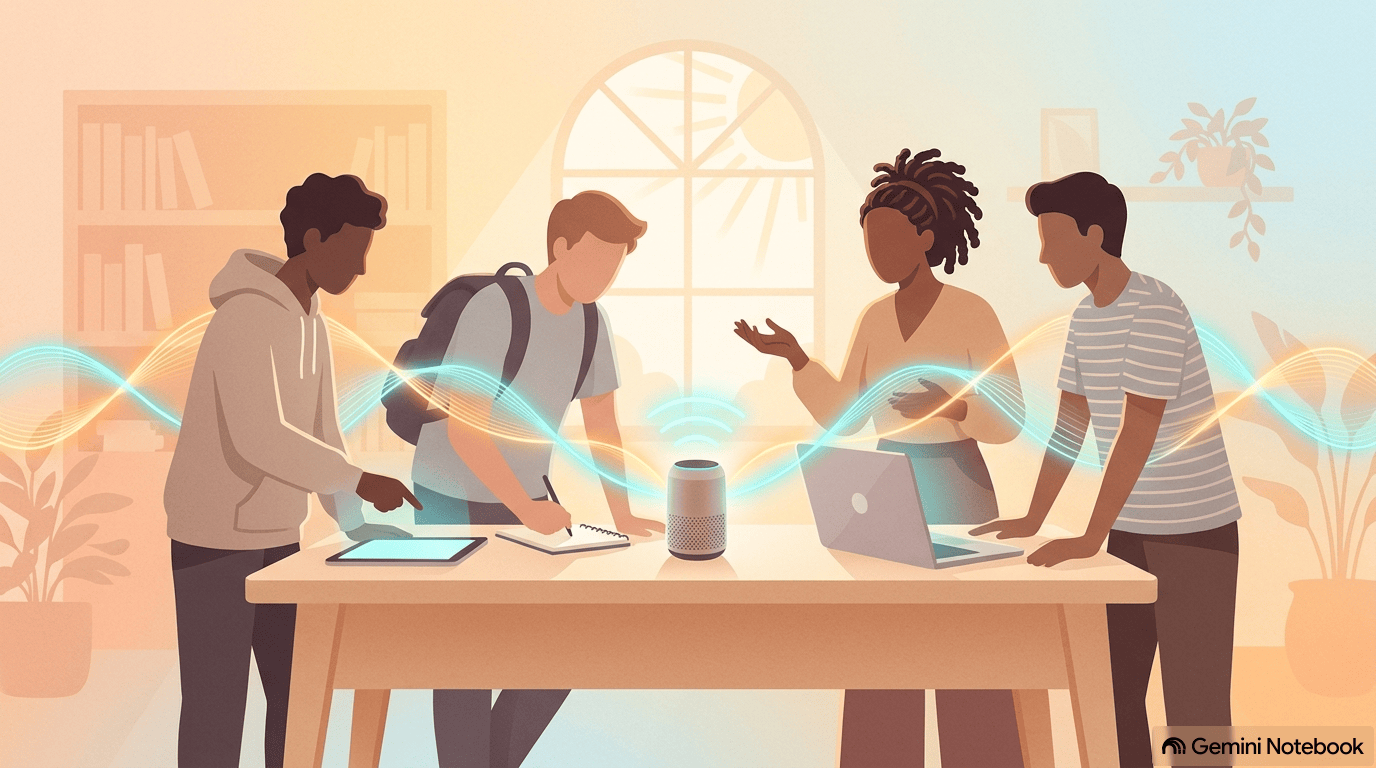
To find a constructive path forward, our team had the opportunity to attend a webinar titled ‘Back to Campus with AI: Learning From Student Ambassadors.’ Here is some of what we learned. Instead of just making rules from the top down, the featured presenter (Denison University in Ohio) brought students directly into the discussion to co-create solutions. Those that attended the webinar were left with the idea that perhaps we can listen to our students and build classrooms where everyone feels trusted, supported, and ready to learn.
Bringing Students to the Table
Our community college serves a wonderful and diverse group of learners. Often, institutions talk about students rather than with them when making AI guidelines. At Denison University, they took a different approach by starting a Student AI Ambassador Program. They hired ten student leaders from different majors and academic years to help guide the campus AI strategy.
These student ambassadors sat down with campus leaders, contributed to official guidelines, led peer workshops, and developed educational resources. Here are a few of the things they discovered:
There Is No Single Student Perspective
It is easy to assume that all students use AI in the same way, but their attitudes actually vary widely based on their disciplines. The webinar highlighted two major groups:
- The AI Enthusiasts: Students in areas like computer science and business are often excited about experimenting. One of the ambassadors, a senior in computer science, uses AI to write code and build mobile applications. Other students use AI as an intellectual ‘brain partner’ to plan their days and bounce ideas around.
- The AI Skeptics: Conversely, students in the humanities, arts, and environmental studies are often deeply skeptical. They worry that AI might replace genuine human creativity and communication. Environmental studies majors are also concerned about the heavy energy consumption and carbon footprint of running massive AI data centers.
!!SURPRISING CAMPUS DATA!!
Denison University conducted a year-long campus survey. They found that the number of active student AI users actually dropped from 93% to 72% in one year. As students attended AI literacy workshops, they became more critical of the technology. They did not just use it blindly; they started asking hard questions about ethics, accuracy, and environmental costs.
What Students Want: Clarity, Not Just Access
A common worry among faculty is that students just want free access to AI tools. However, the student ambassadors shared that what students actually crave is clear guidance on what responsible use looks like in each course.
One of the ambassadors, a biology major on the pre-med track, explained how confusing it is for students when every professor has a different, unspoken policy. One class allows AI, another bans it, and a third says nothing at all. The ambassadors suggested a simple solution: treat AI guidelines exactly like textbook rules in your syllabus. Specify if a physical textbook or an e-book is needed, and do the same for AI.
Explain exactly when AI is allowed, such as during the brainstorming phase, and how students should declare its use. Providing clear expectations replaces student fear of being falsely accused of cheating with shared language and mutual trust.
Immediate Classroom ‘Micro-Moves’ for Faculty
Based on these lessons, here is a quick-start guide of immediate actions you can implement in your courses. These micro-moves build transparency and encourage critical thinking.
| Classroom Challenge | Immediate Action (Micro-Move) |
| Unclear AI Expectations Students feel confused and anxious because expectations vary widely across courses. | The AI Syllabus Section Add a clear, separate section to your syllabus explaining exactly where, when, and how AI can be used (e.g., brainstorming only, full use, or zero use) and how to cite it. |
| Superficial Shortcut Use Students use AI as a ‘ghostwriter’ to generate entire drafts without learning the material. | Grade the Process, Not Just Output Break large assignments into progressive steps. Ask students to submit their AI chat logs, explain their prompt decisions, and write brief reflections on how they verified the AI’s claims. |
| Blind Reliance on Technology Students grab AI out of convenience, forgetting how to solve problems on their own. | The AI-Free Week / Task Set aside one week or one specific task to be completed entirely without AI. Follow it with a collaborative classroom discussion about what skills require a human touch. |
Two Exciting Classroom Experiments to Adapt
To foster deep critical thinking, consider adapting two creative campus experiments shared by the Denison student ambassadors:
- The Classroom ‘AI-Free Week’: This experiment was designed to ask questions rather than prove a point. During an AI-Free Week, a student ambassador and a campus leader stopped using AI entirely. They shared how heavily they relied on AI for small conveniences like scheduling. Additionally, they realized that they had started grabbing AI instead of turning to human conversations. In our classes, we can run a short AI-free period and ask students: Where has AI become a mindless routine? When is it replacing conversations or decisions you should handle yourself?
- The Spark & Stone Persona Model: The student team developed two custom AI agents to help plan events. They did not want a single assistant; they wanted two distinct voices. Spark was programmed to be an enthusiastic, supportive partner that throws out massive lists of creative ideas. Stone was programmed to be a brutally honest skeptic that challenges assumptions, asks ‘why,’ and flags uncool language or logical gaps. We can teach our students to prompt AI as a Socratic sparring partner. Instead of asking AI to write a paper, they can ask it to play ‘Stone’ and critique their existing arguments.
Co-Building the Future of Education
Education can be a collaborative journey. Shifting our perspective from ‘how do we block AI’ to ‘what can we build together with our students’ opens up incredible possibilities. By giving students meaningful responsibility, they develop leadership, critical thinking, communication, and career-connected skills. Let’s embrace this opportunity to co-design our courses, co-build our guidelines, and learn alongside our student partners. We are excited to walk this path with you!
Resources
- Denison University (AI + Denison) – With a deliberate focus on academic innovation and workplace readiness, Denison University is leading a new model for AI in higher education.
- HERizon AI Consulting – HERizon AI bridges the gap between the exciting potential of AI and the skills organizations and individuals need to use it responsibly and effectively.
- The Authors of Nature Podcast (Spotify) – Podcast by Denison student Kelsey Sweetland, a 19-year-old four-time published children’s author and founder of the National Geographic-recognized Authors for Nature platform.
- Authors for Nature – Empowering young authors to create meaningful stories that advance environmental and social causes through the UN Sustainable Development Goals.
- The Tomorrow Institute (NPR News) – A collaborative summer school program where college student ambassadors worked directly with high school students on real-world AI consulting projects.
- CTLE Bog Post – (Red Light – Green Light) – One of the best ways you can support that is by giving clear, simple rules for each assignment. The “stoplight” model is an easy way to do that: red, yellow, and green.
ChatGPT and Gemini were used to create this blog post. (Image, brainstorming, outlining, and final copy edit)
Looking for a thought partner?
The CTLE team can help you generate new ideas, revise assignments, and thoughtfully integrate AI into your teaching. We are here to support you!
Connect with us to get started.

